
Set Review ➟ LEGO® Ninjago Dragons Rising 71859 The Dragon of Life
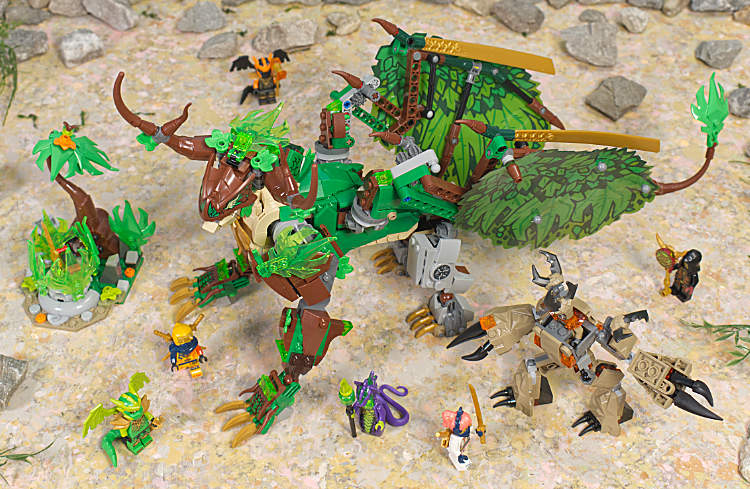
The Dragon of Life set consists of one large dragon, a small mech, a spot of enviroment, and seven minifigures. Instructions are presented in two parts, a small booklet for the mech and environs covering two bags of parts and a large book for the dragon covering seven bags of parts.
Worth a mention is that the box is a two-parter with a bottom tray and removable top lid as opposed to the more frequent open-one-end-flap design. The cardboard is thinner, though, than on the open-one-end type boxes. Inside, the instructions, stickers, and a plastic sheet come in a paper sleeve keeping things flat. The plastic sheet wings are particularly attractive with their combination of opaque and transparent inks.
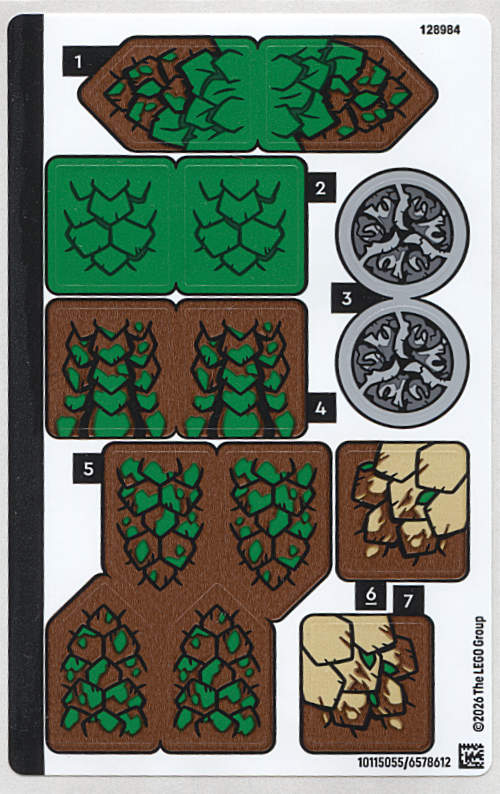
The stickers.
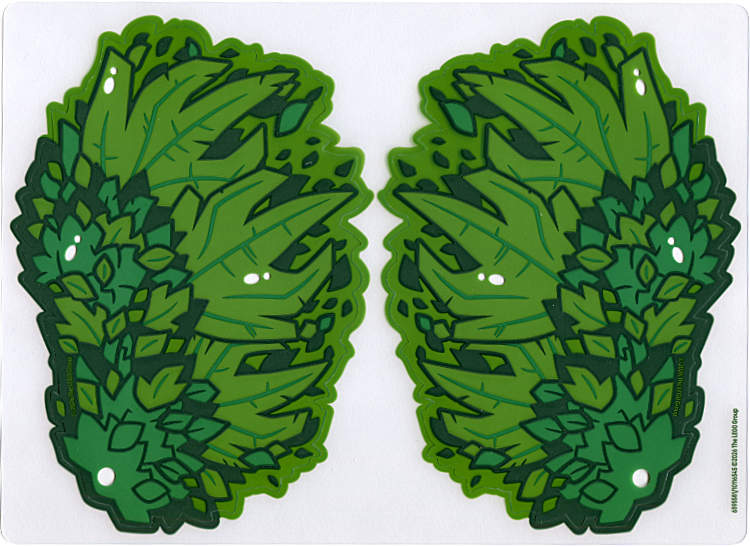
The plastic sheet “dragon wings”.
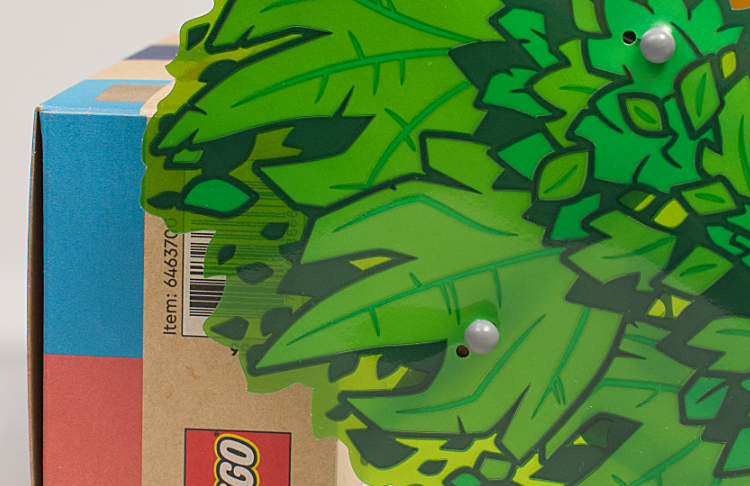
A combination of opaque and transparent inks give the wings added depth.
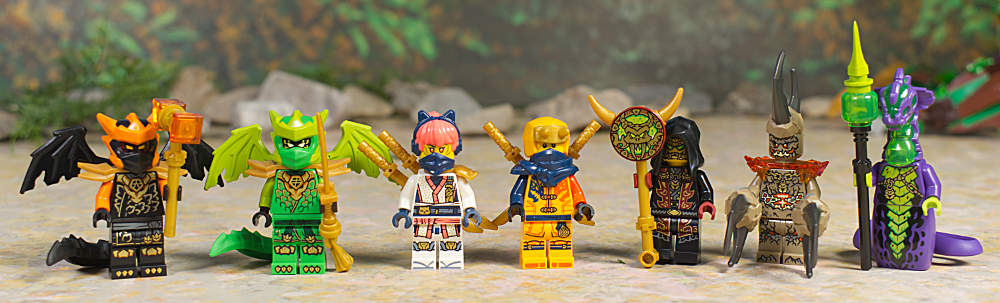
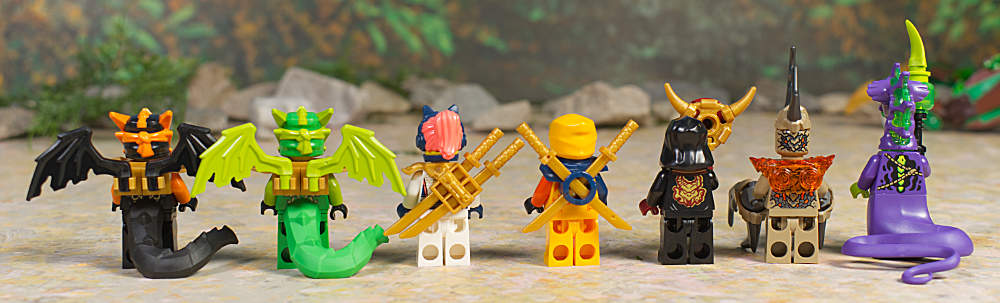
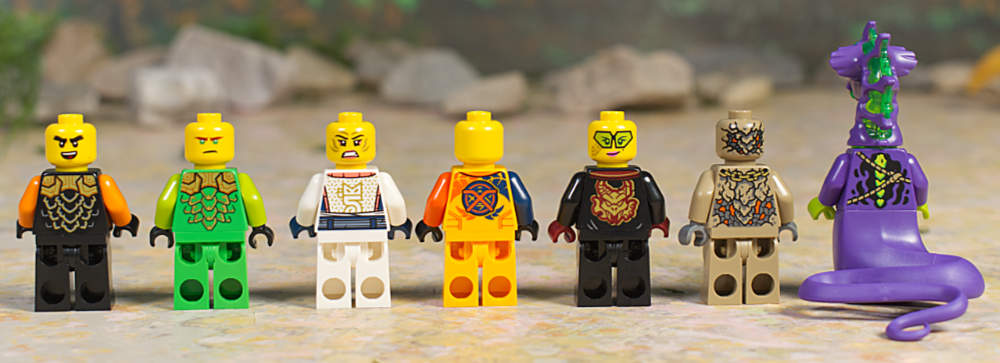
Minifigures are Dragon Form Cole, Dragon Form Lloyd, Sora, Arin, Loyalist Leader, Earth Monster, and Acid Monster. Cole and Lloyd are exclusive to this set (so far), while the rest can be found in other sets in this wave.

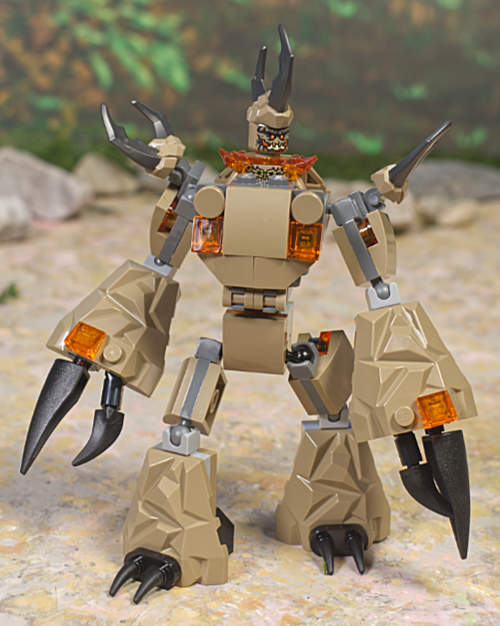
Earth Monster gets a mech in this set and had a spinner in set 71850. I have no idea why an Earth Monster would be so reliant on mechanical transportation, but apparently… The mech is essentially the same mech as in set 71851 except with different greebling, taller feet, and the blessed absence of a flame coming out its butt. One difference is that this mech adds a plate at the seat so Earth Monster’s shoulder pads clear the back of the cockpit.
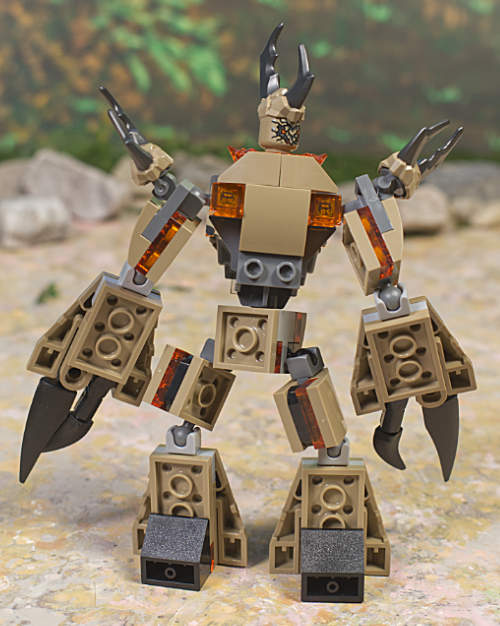
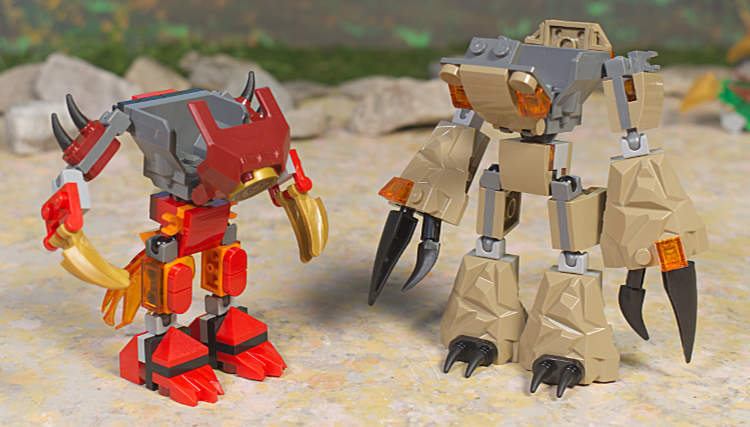
The 71851 mech, left, and the Earth Monster Mech, right.
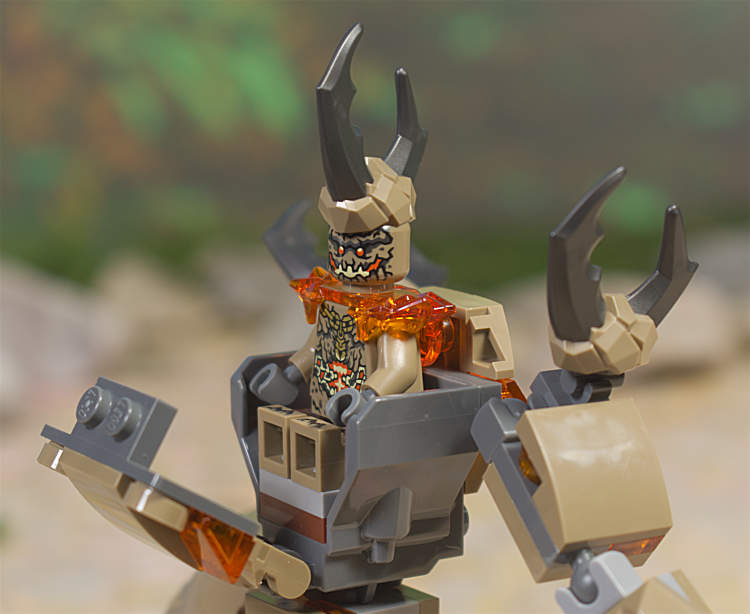
The Manhattan phone directory isn’t what it once was, so Earth Monster gets a plate as a booster seat.
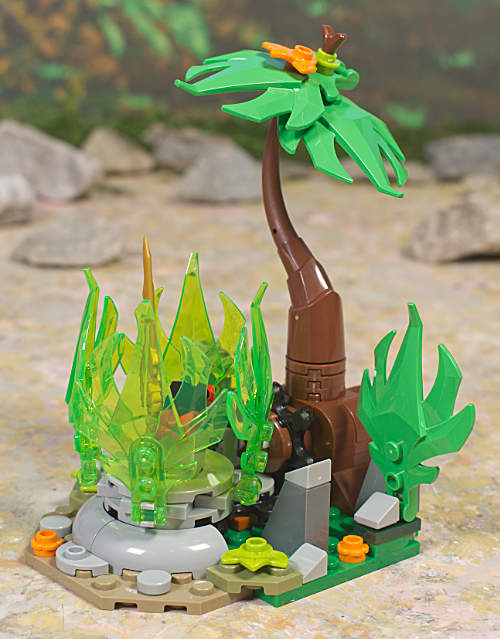
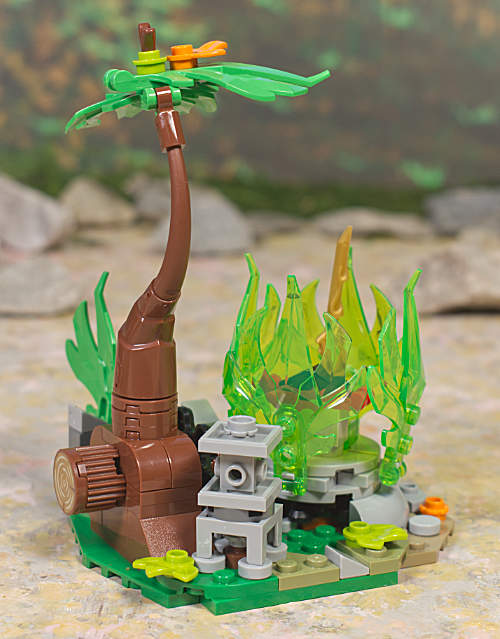
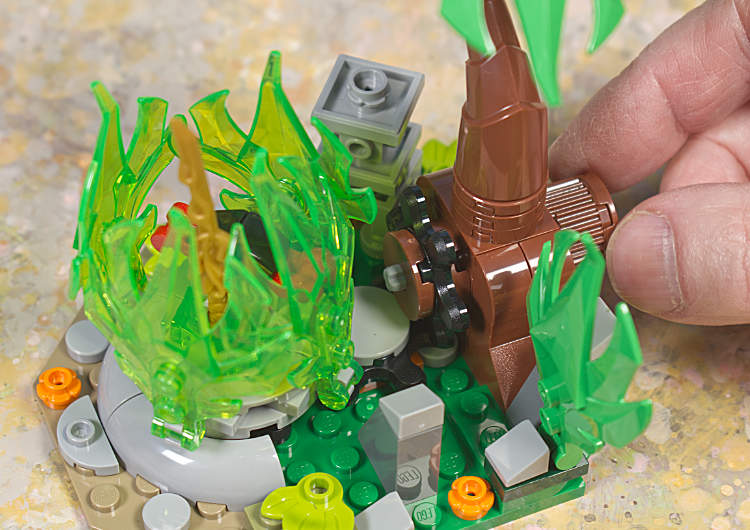
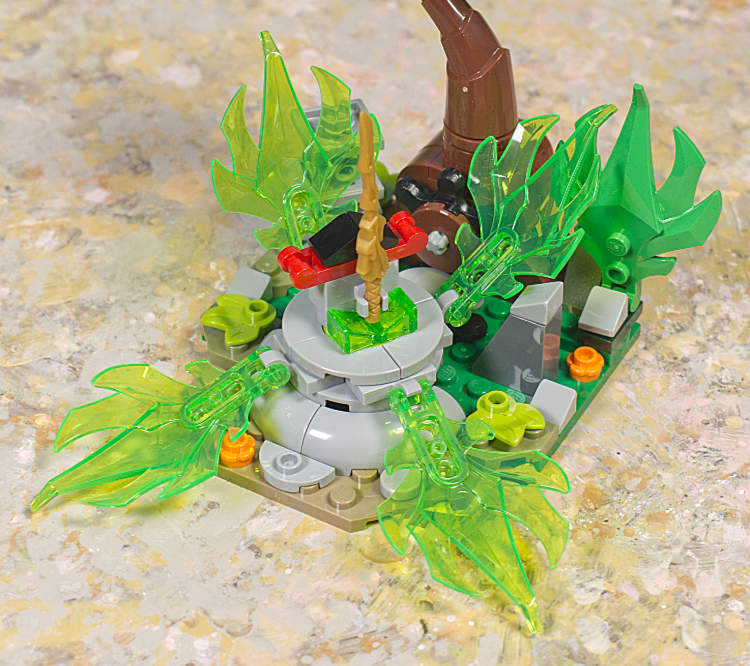
The modest environment assembly is quite pretty and has a spinny bit where a knob on the back of the tree turns a gear assembly which spins the eldritch fire centerpiece in a Boy Scout approved fire pit. The transparent bright green flames do pivot so the magical weapon can be removed from its perch. If the flames are tipped down, they do bump into other model elements, so the flames do need to be pretty much vertical for any spinning to be spinnable.
Dragon of Life is very front heavy. For standing, this means dragon can sometimes be posed with either of the back legs raised but with neither of the front legs raised. Wing position can affect balance considerably. Shoulder and hip joints are technic ratchet joints, the shoulders with larger and the hips with smaller assemblies. This is welcomed as both are secure, offer a wide range of movement, and remain stable when placed in position. As is most often the case, there is no movable elbow or knee joint, only shoulder/hip and wrist-ankle.
Construction at the shoulder does not allow for the legs to be positioned fully at a 90 degree angle directly below the body, instead they max at one click out. Upwards pivot is limited to plus two clicks; total pivot range is just over 90 degrees. The rear legs can be positioned directly below at 90 degrees and upwards at about 45 degrees…not that anyone is going to want to place the legs in the more extreme positions.
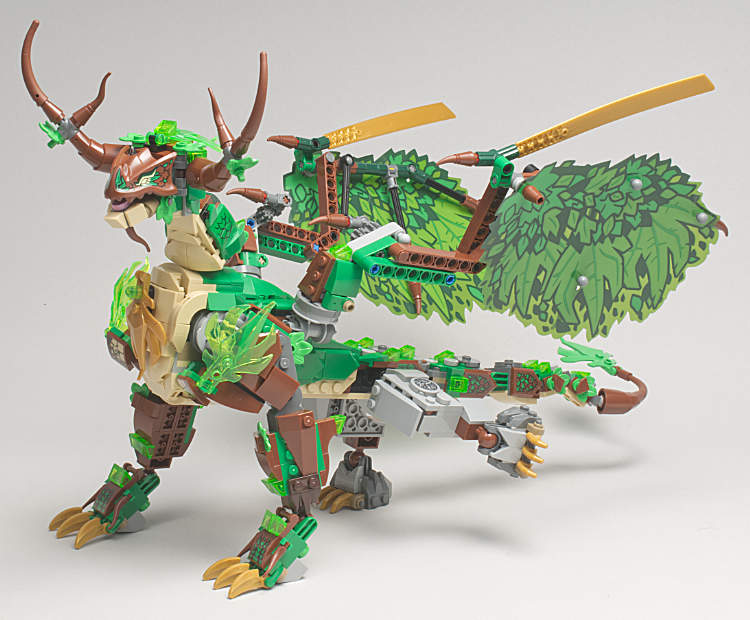
The front weight is also greater than what friction at the ball-and-socket joints at the wrists can overcome and the hands which are obviously intended to be posed in one position often end up slumping. I did not have issues with the ankle joints, but note the rear legs are relatively small and light, as is the adjacent body, compared to the size and weight with what is in front.
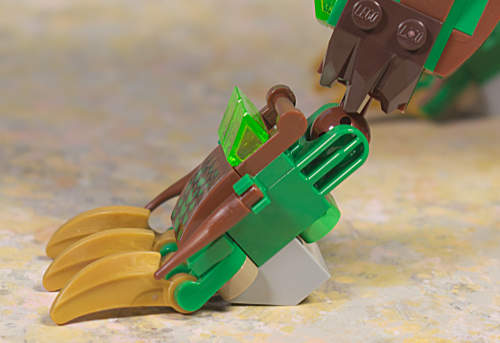
Intended position…
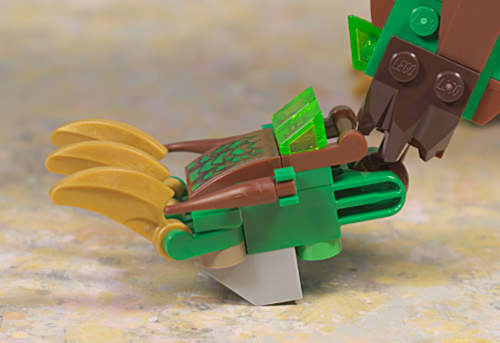
…because of weight eventually devolves to this.
The neck of the dragon is connected at the shoulders with a ratchet joint which is great for stability and provides 360 degrees of turn but in this instance only two clicks of pivot. The head is attached to the neck with a ball-and-socket joint, allowing for a great degree of positioning. The ball-and-socket seemed to function adequately as the head itself is not particularly heavy and what weight there is lies close to the joint and not far away from it.
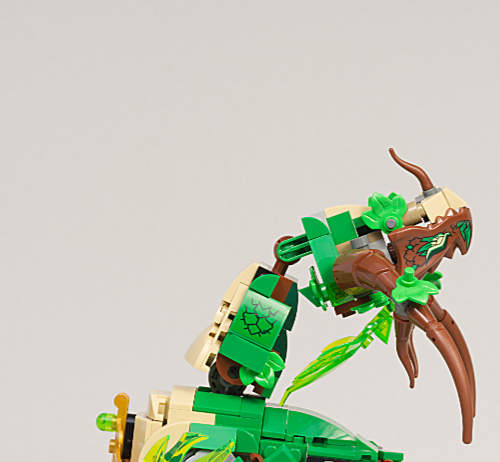
Head and neck tipped back as far as possible.
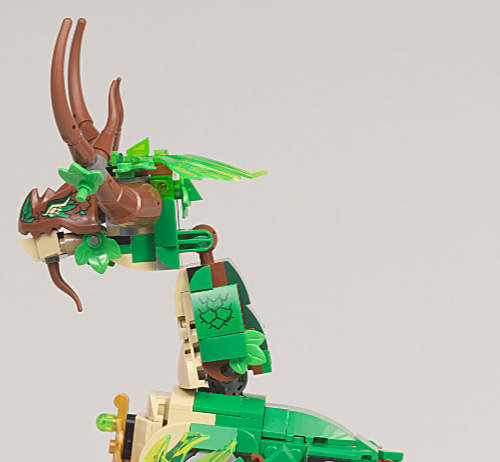
Head and neck positioned forward as far as possible.
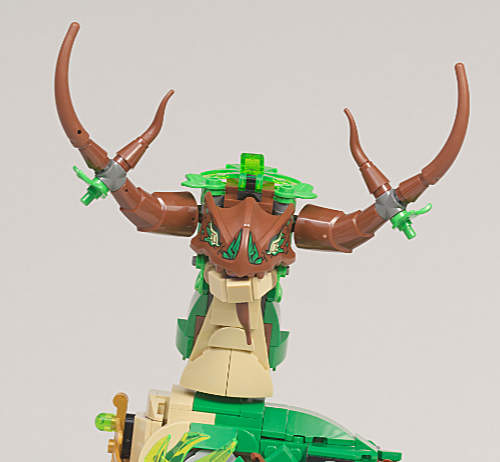
Neck rotated to the side at the shoulder.
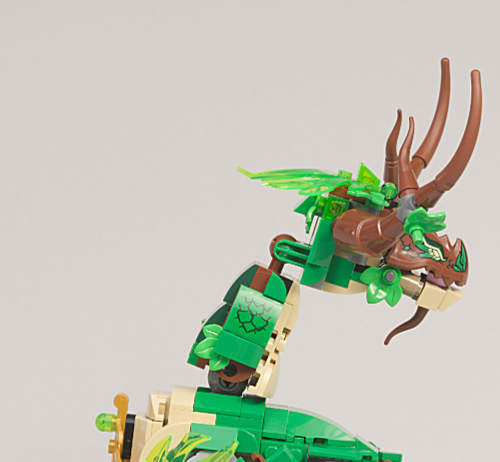
Neck rotated 180 degrees at the shoulder.
Dragon’s mouth opens and closes with an atypical bar-and-clip assembly.
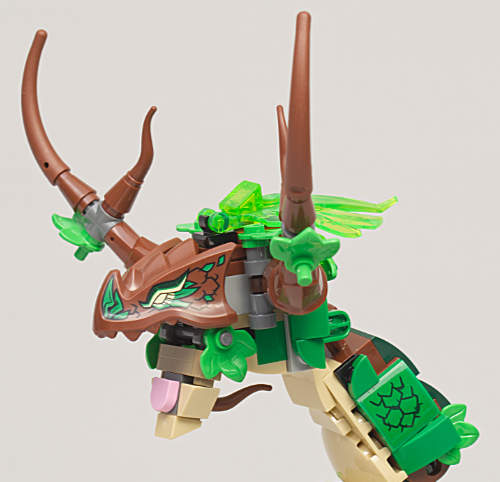
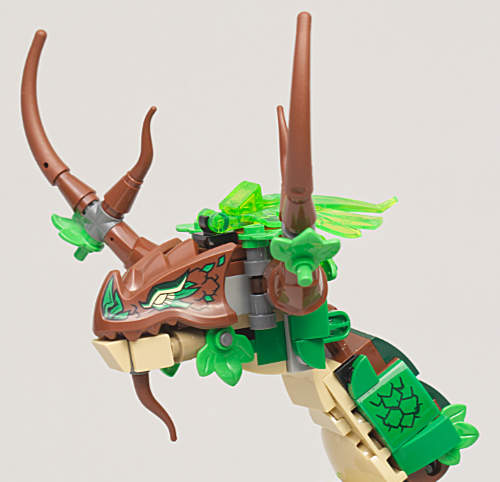
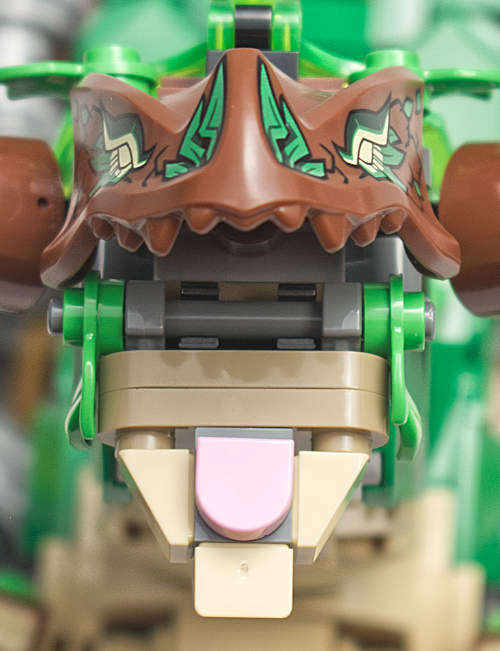
All the while I was assembling the dragon I thought to myself…because I was alone and couldn’t think to somebody else, which in my experience is impossible anyway…what a lovely dragon. The colors are appropriate for a sort of earth life theme and the kind of dirt, leaves, rock vibe is pretty cool.
Then came the wings.
For me, the wings are a decidedly mixed bag. The structural part of the wings are technics parts—and a lot of them—that provide mechanical movement, which theoretically is a nice feature. The attachment point just behind the shoulders is a set of fixed pins going into a double ratchet. This allows for up-and-down movement but not front-to-back. On the other end of the joint is a circular connection which theoretically allows for 360 degrees of rotation. Following the circular joint are a lot of technic liftarms, associated connectors, joiners, pins, and axles.
In contrast to the rest of the dragon, which the designers have gone to the effort of making look natural, the wings look fabricated. While the body of the dragon conveys sticks, mud, rocks, and leaves…the wings convey…girders.
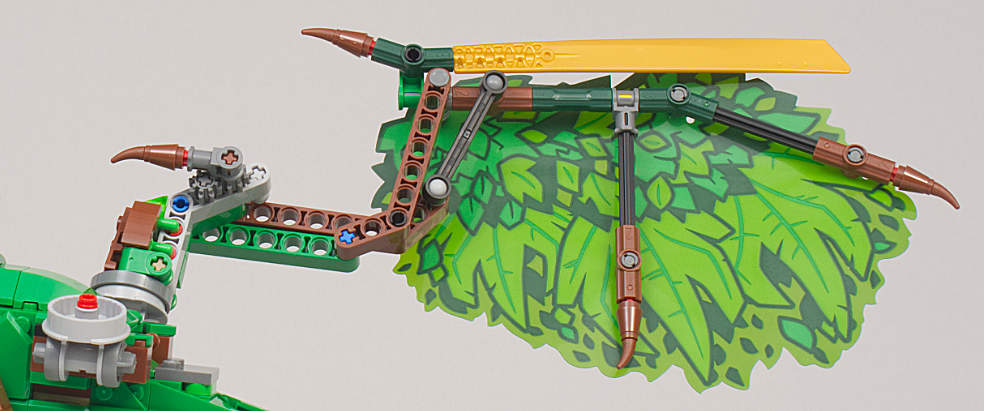
This view has the left wing removed for viewing clarity.
I tried attaching some various “leafy” parts to the technic arms to see if they could be disguised, and to see if the disguise would impact positioning when attached to the dragon. I think the efforts were at least somewhat successful in hiding the mechanical look of parts of the wing mechanism, so aesthetically it is at least possible to somewhat minimize the mechanical look.
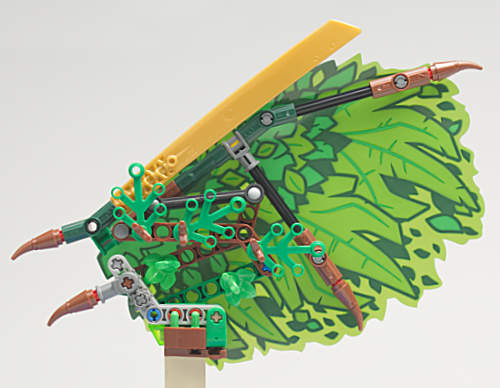
Well, this is kind of busy but does not impact wing position or movement.
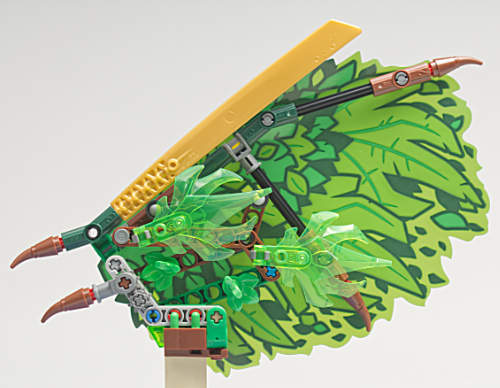
Does a good job disguising, but the lower leaf moves around when the wing is positioned in certain ways.
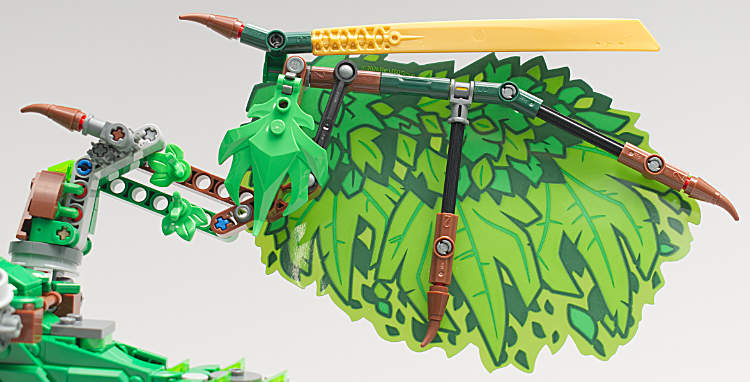
The wings seem to operate less as wings and more as camouflage. They can not be positioned in an out-to-the-front, out-to-the-side, to-the-rear sweep. Their appearance is inverted from what I would expect where, when the wing is out to the side, the bony structure lies on top and not underneath the verdant sheet covering. When collapsed to the side, though, they cover most of the rear of the dragon, save the tail. In the pictures below the far wing was removed for clarity.
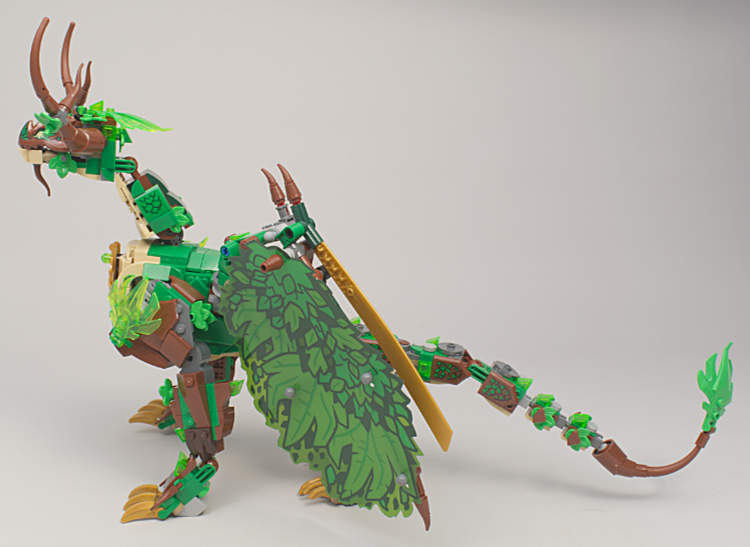
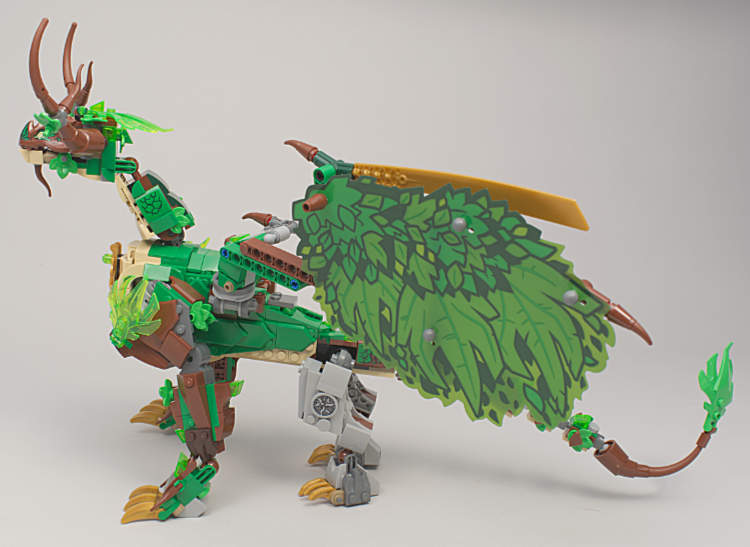
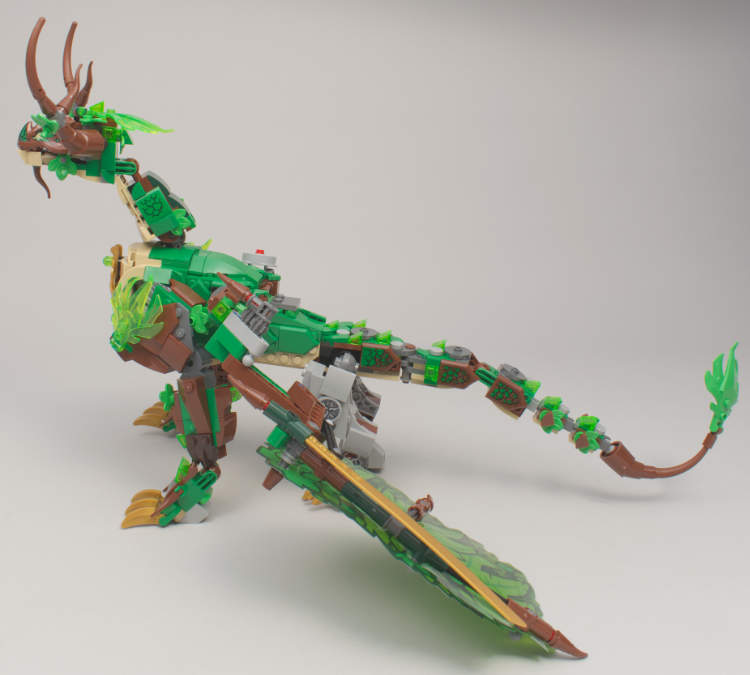
The wing cannot be positioned farther forward than this. It can however be flipped over, making the wing appear to the front, but mechanical movement of the wing is then towards the chest and immediately limited by the shoulder.
The wings also sport some long blades offering about 90 degrees of potential positioning, but they are more WTF than awesome.
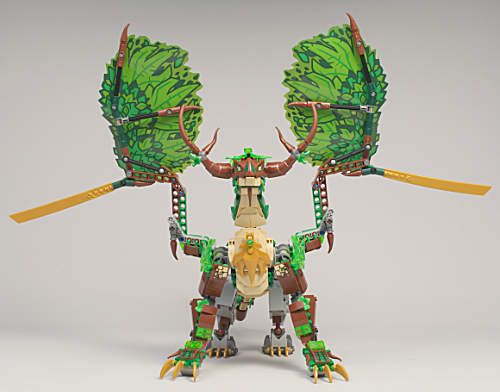
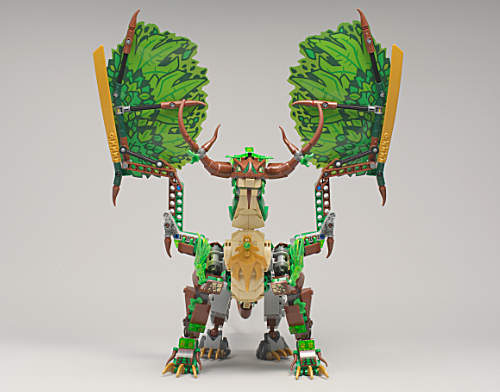
Again note that the wings are mechanical in nature. Twisting a front spike attached to gears causes the wing to fold and unfold. The folding movement is stiff: for the better, the wings stay where they get positioned…for the worse, the model needs to be supported to overcome the friction.
Achievable positions for the wings are often in conflict with the body. Downward positioning often means the sheet plastic comes in contact with the ground, and the wings can be positioned farther down than the ground is wanting to allow. Wings can also be folded behind the dragon’s back. And unfortunately, the wings cannot be positioned such that the leading edge of the wing is closer to the dragon’s side than the tips. From a side view the wings are always canted towards the ground instead of the sky…which is a shame because the decoration on the plastic is really lovely.
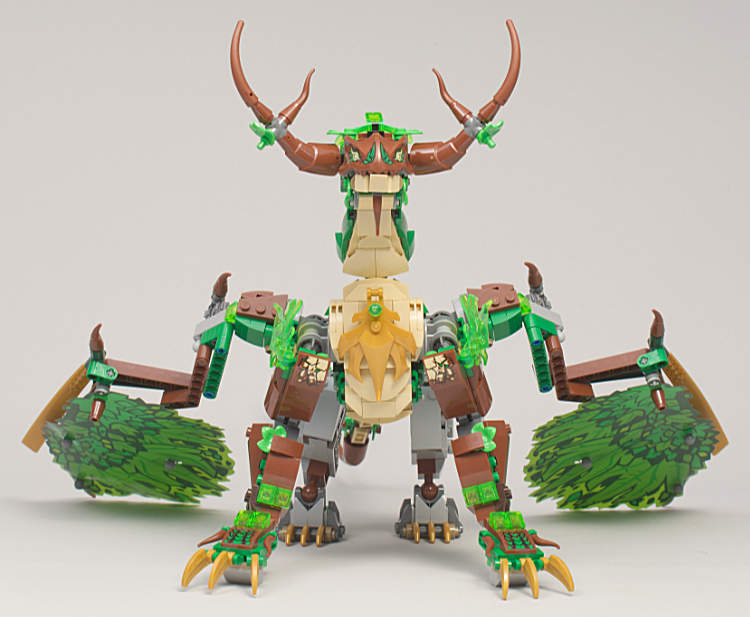
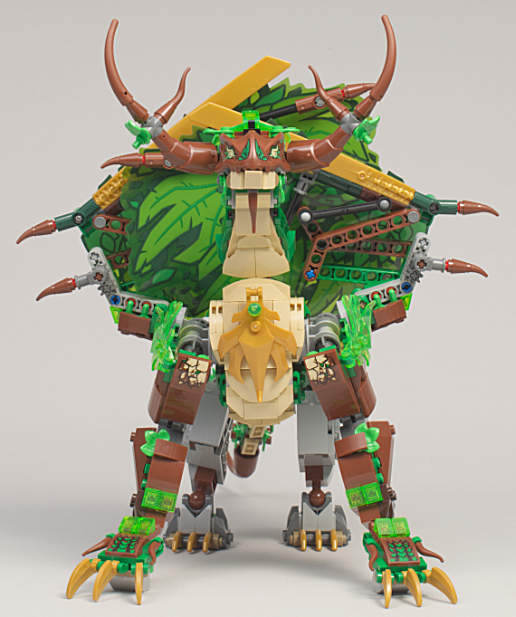
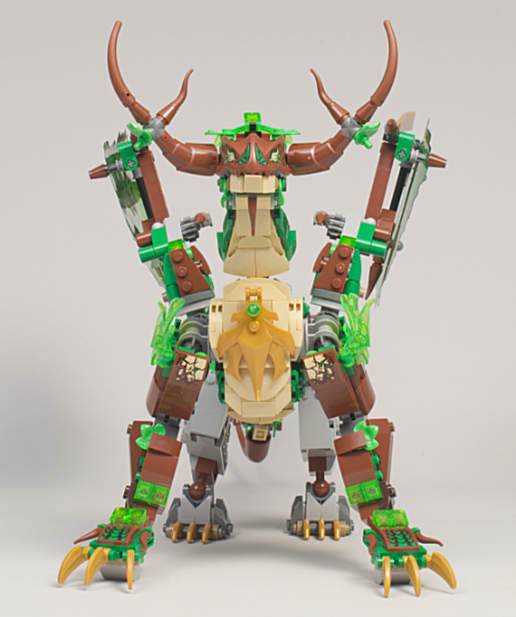
For what it was worth, I tried swapping the wings to see what that looked like. In one sense it was better, however the wings would need to be able to pivot forward towards the chest when wings are parallel to the ground and the designed assembly does not allow that.
The wings also come across as being more of a flash warning, akin to a frilled lizard, and less a structure that can lift the dragon aloft. I would describe their range of movement as more able to provide a clapping motion than a flapping motion. When extended, the wings are visually divorced from the body…mechanical arms frankensteined onto an organic creature. On the whole the wings are just…odd.
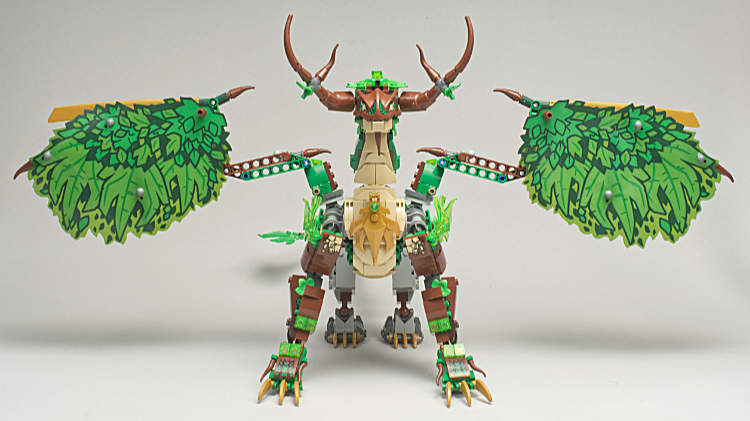
Wings cannot be positioned higher than this.
The tail where it attaches to the body is attached with an axle through holes in plates so it moves freely at that point wherever it wants. It wiggles of its own volition but is fairly limited in range.
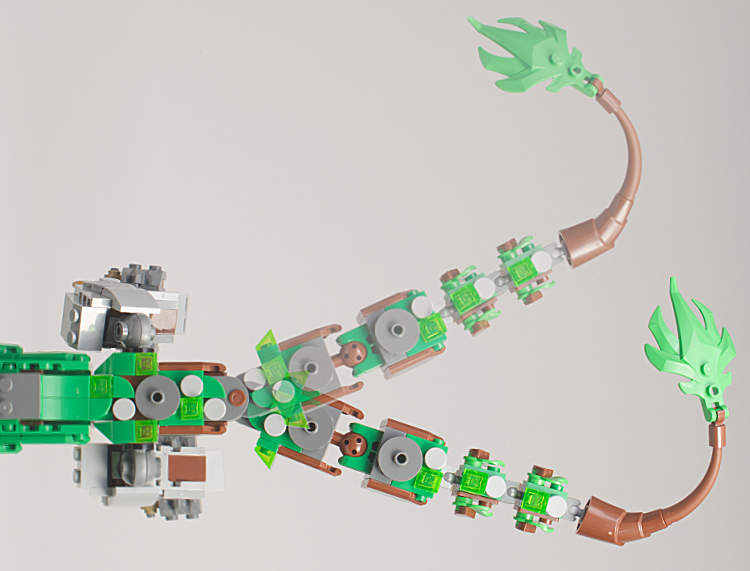
Left to right wag is fairly limited as shown here.
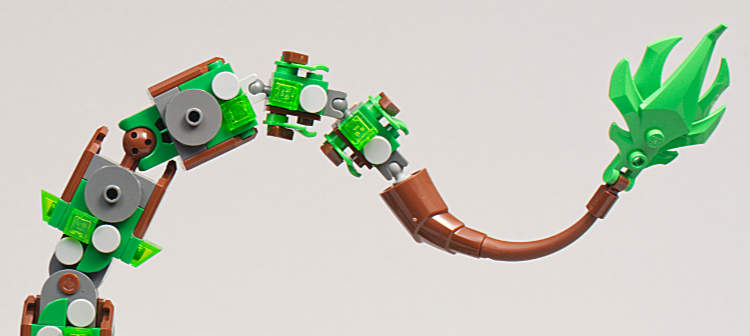
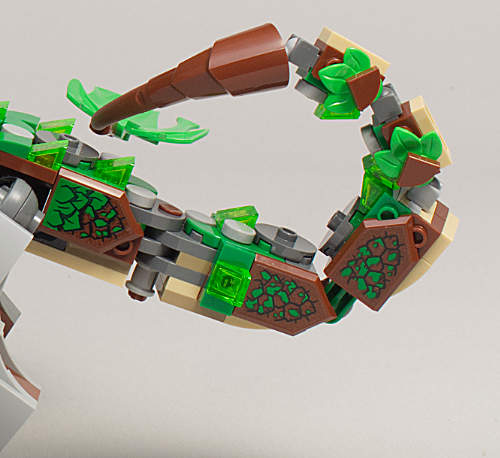
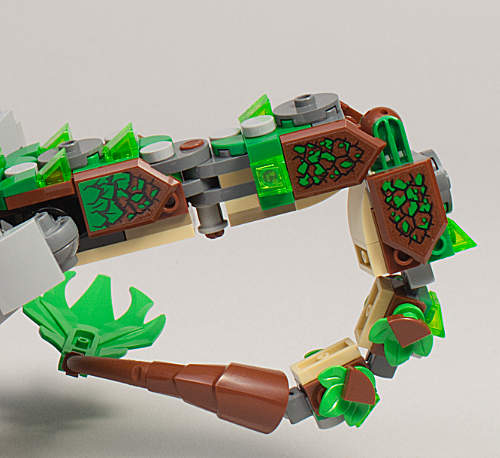
The subsequent portions of the tail are ball-and-socket joints and hold reasonably well as there is no significant weight borne by any of them. Up-and-down as well as side-to-side curl potential is reasonably dramatic. The leafy tip of the tail is a bar-and-clip attachment and holds as one would expect.
The Randolph T. Fielding Absolutely Administrivia Section
All minifigure heads use part 3274.
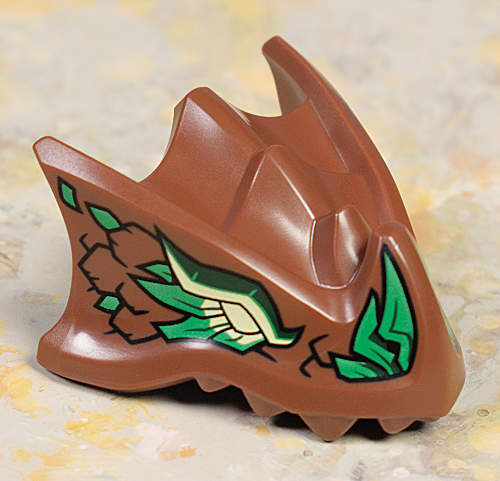
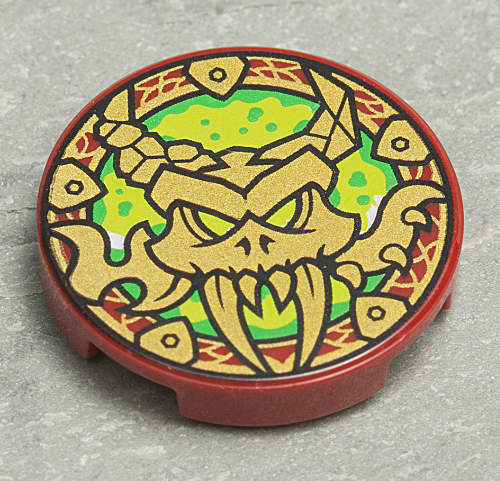
The two printed pieces in the set, other than minifigure parts, are the dragon head and the round tile on Loyalist Leader’s staff.
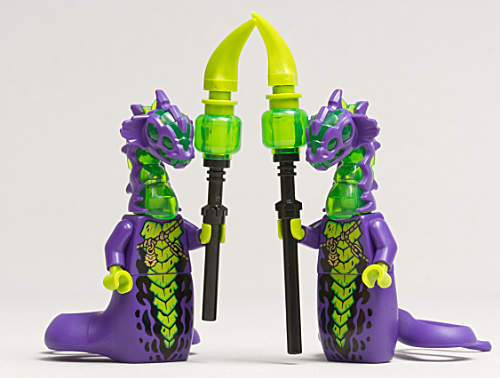
In the department of things that may be interesting only to me, Acid Monster gets a 4L bar on its weapon in this set and a 3L bar in 71854 Cole’s Mech and 71857 Treehouse sets.
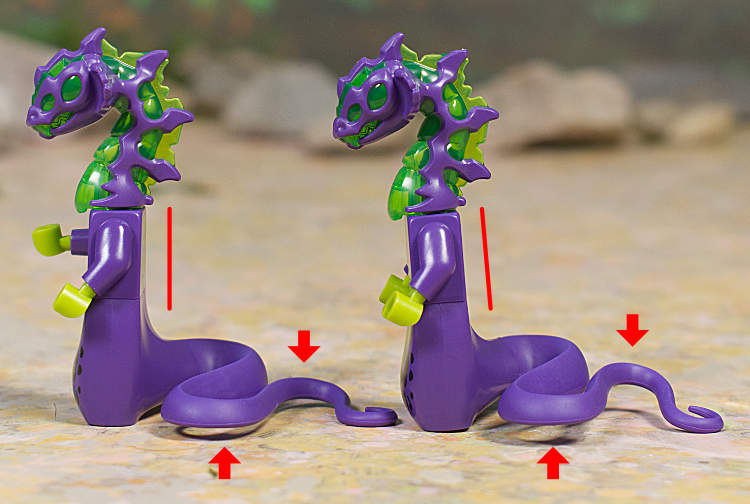
In sets 71854 and 71857, Acid Monster has a relatively flat tail projection. In this set Acid Monster has a tail that is somewhat bent down. I do not know if that is a production anomaly or a product of being bent while in the parts bag or what. What I can say is that it having been out of the bag for a week it has not relaxed or flattened with time.
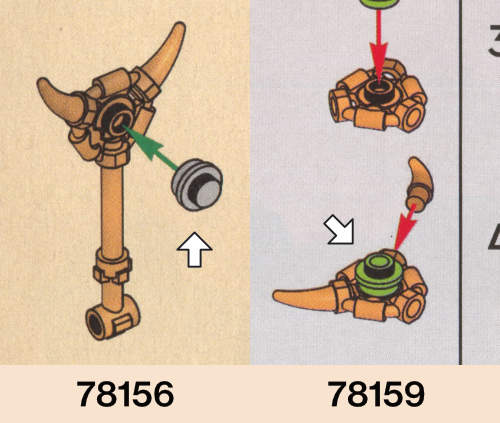
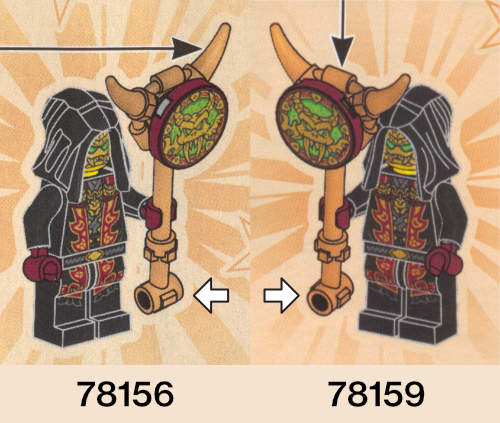
Loyalist Leader gets a medium stone gray 1x1 round plate behind the printed tile on her staff in set 71856 Transforming Car set and a lime 1x1 with hole behind the tile in this set. Instructions also show the foot attached to the staff perpendicular to the horns at the top of the staff in this set and parallel to the horns in 78156.
Summary
The set has a nice selection of minifigures, and the little environment and the mech make for play bonuses. The dragon, however, is something less than facile in terms of play. The dragon gets thumbs up from me as a display piece, one of the bigger points of interest for me being the leafy wing decoration. Unfortunately that part that should be highlighted in more quantitatively achievable positions either faces away from the viewer or is obscured, or othrwise distracted from, by structural technics parts. The head and neck being relatively restricted in range of movement is another point for perceiving the piece as majestic and display-only rather than a play piece.
If the intention with the wings was to be leafy-looking-dragon-hiding-in-the-forest-suddenly-appears-with-intent-to-scare-the-bejesus-out-of-people, then I think it could be considered mission accomplished. If the intention with the wings was to be a flying dragon, that is, to invoke the words of Mister Baseball, “Juuuust a bit outside.”
Disclaimer
Thanks to LEGO for kindly providing the set for review.
33704